


What your soil's pH is telling you.
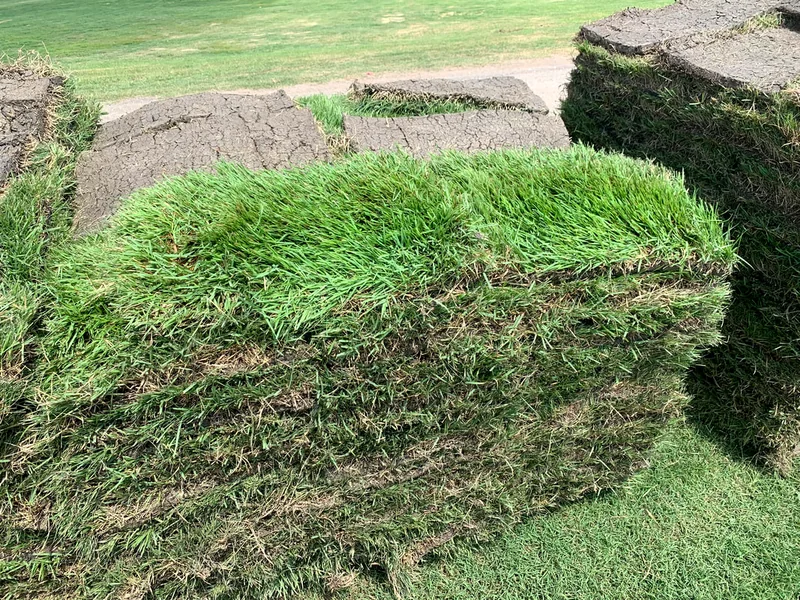
Stack of fresh sod ready for installation, showing healthy root and soil layer
A lawn can be watered, mowed, and fertilized exactly right and still struggle, because underneath all of it, the soil's pH is quietly deciding how much of that work the grass can actually use.
What soil pH actually measures
Soil pH measures how acidic or alkaline your soil is, on a scale of 0 to 14, with 7 as neutral. Most turfgrass, including the Bermuda and Zoysia common around Caddo Mills, prefers a slightly acidic range, roughly 6 to 7.
When it's out of range
Soil that's too acidic (a low pH) can lead to stunted growth, yellowing grass, and greater susceptibility to disease and pests. Soil that's too alkaline (a high pH) makes it harder for grass to absorb nutrients, which shows up as reduced root growth and dull, discolored turf, even when you're fertilizing on schedule.
Fertilizer doesn't fail on its own. Soil pH decides how much of it your grass can actually absorb.
How it gets corrected
A soil test is the only reliable way to know where your lawn stands. From there, the fix is usually one of two amendments:
- Lime raises pH, correcting soil that's too acidic.
- Sulfur lowers pH, correcting soil that's too alkaline.
Both work gradually, over a full season or more, so pH correction is a long-term project rather than a one-time fix.
Where this fits into your lawn program
Soil pH management is part of what makes our 8-step fertilization program effective, we're not just feeding the lawn on a schedule, we're making sure the soil underneath can actually put that feeding to use.
More From Turf Talk
Keeping Fire Ants Out of Your Yard
Why one treatment rarely ends the problem, and what ongoing control looks like.
Your Fall Leaf & Debris Cleanup Checklist
Why leaf buildup damages your lawn, and a simple seasonal checklist to stay ahead of it.
How Much & How Often to Water Bermuda and Zoysia Lawns
The simple weekly watering rule that keeps North Texas lawns deep-rooted and drought-resilient.