



The right way to mow a North Texas lawn.
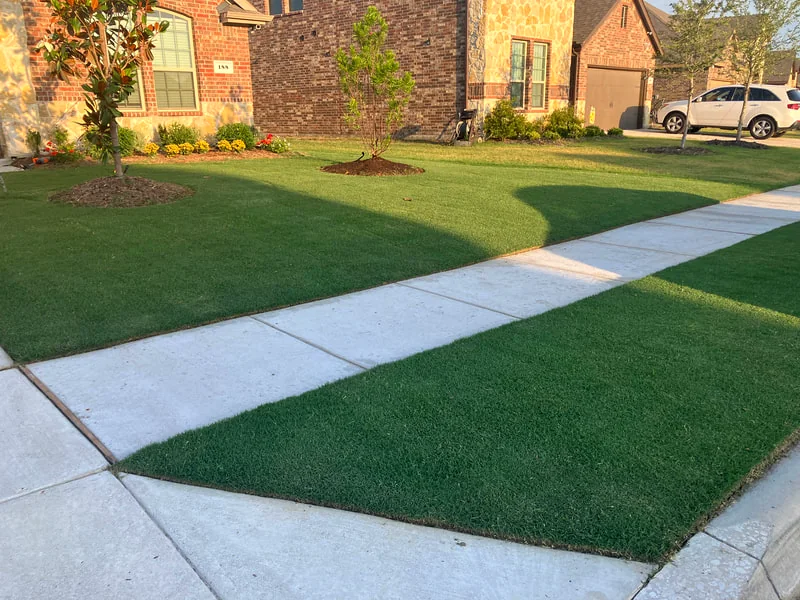
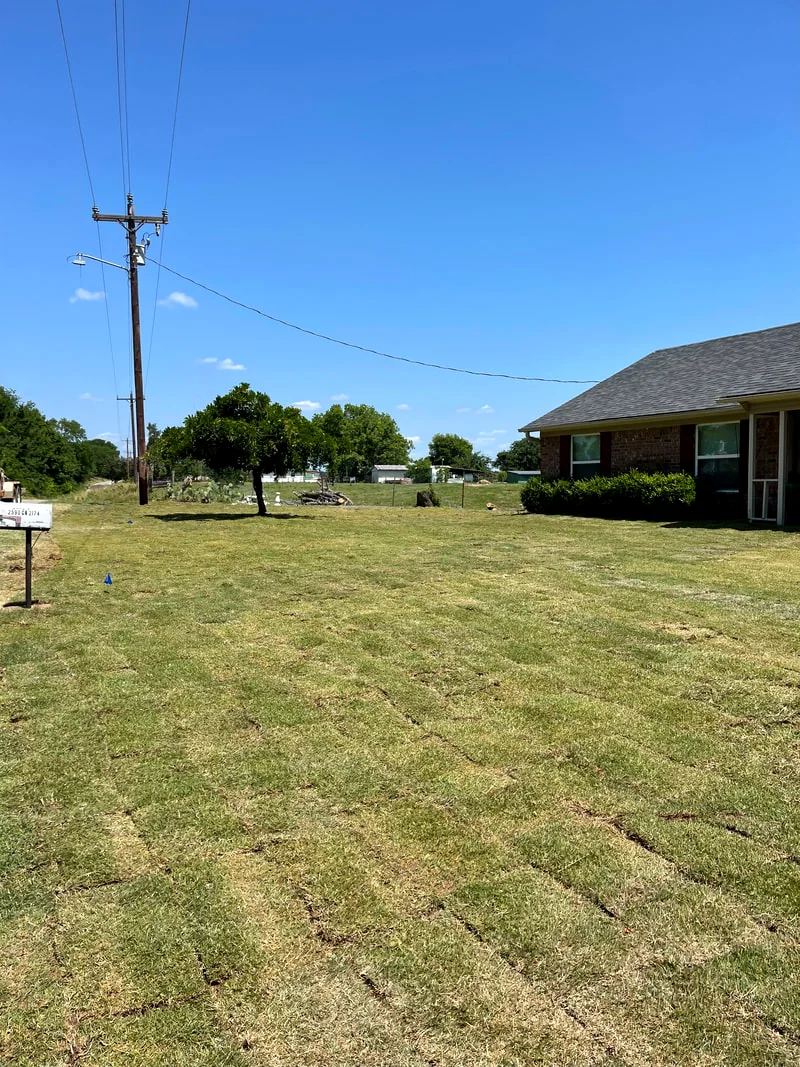
Freshly mowed lawn with a crisp, straight edge along the driveway
Mowing looks simple, so it's easy to assume there's not much to get wrong. In practice, the height you cut at, when you cut, and how often you cut do more to determine whether a lawn thrives or struggles than almost anything else we do.
Start with sharp, well-suited equipment
A dull blade tears grass instead of cutting it cleanly, leaving ragged, whitish tips that are more vulnerable to disease and water loss. Keep blades sharp, and match your mower to the size and terrain of your yard.
Set the right height for your grass
Bermuda and Zoysia, the two most common lawns around Caddo Mills, do best kept short, roughly 1.25 to 2 inches. Cool-season grasses prefer a taller cut, closer to 2.5 to 3.5 inches, but that's less relevant to most yards in our service area.
Follow the one-third rule
Never remove more than one-third of the grass blade's height in a single mow. Cutting further back than that stresses the plant and weakens its ability to recover, especially during summer heat.
If you can see clumps of clippings after mowing, you waited too long between visits.
Mow dry, vary your pattern
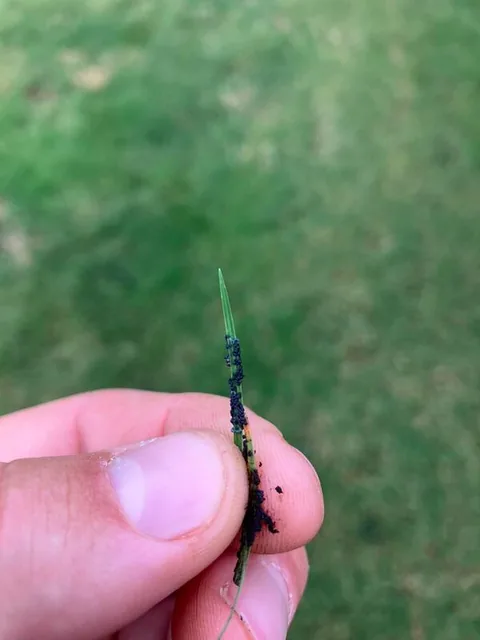
Wet grass clumps and cuts unevenly, so mow when the lawn is dry, morning or late afternoon both work well. Alternate your mowing direction (vertical, horizontal, diagonal) between visits to prevent grass from leaning one way and to avoid wearing ruts into the turf.
Let grasscycling do some of the work
Leaving short clippings on the lawn after mowing returns nutrients to the soil as they break down, acting like a light, natural fertilizer. Just make sure clippings are short enough not to smother the grass underneath. If the lawn got away from you, bag that mow instead.
When it's time to hand it off
A consistent mowing schedule is easy to fall behind on during a busy summer. Our mowing & maintenance visits keep height, timing, and pattern dialed in every visit, so the fundamentals never slip.
More From Turf Talk
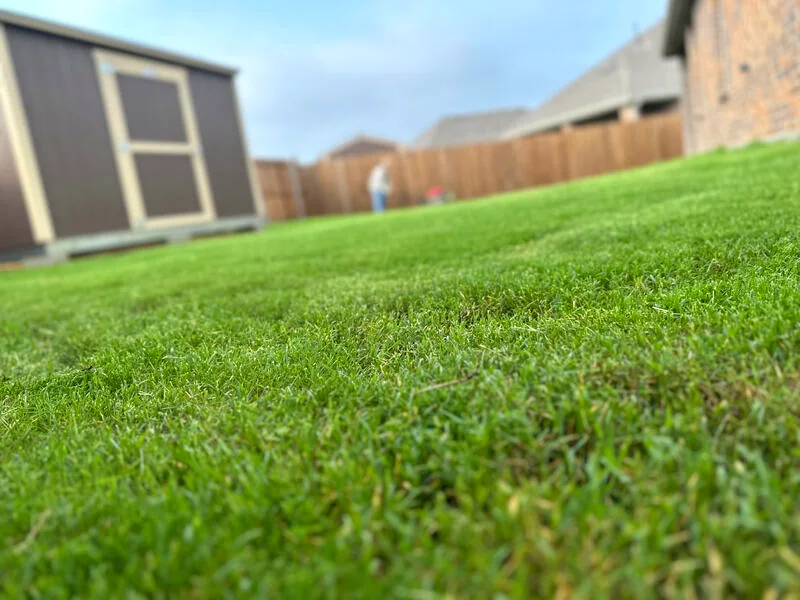
Brown Patch: Causes & Treatment
How to spot this common summer fungus early and stop it from spreading.
What Your Soil pH Is Telling You
Why acidity and alkalinity quietly decide how well fertilizer actually works.
Keeping Fire Ants Out of Your Yard
Why one treatment rarely ends the problem, and what ongoing control looks like.